

How to Pack for an Antarctica Cruise
This article may contain affiliate links where I make a small commission for purchases you make from links that you click from this article. By purchasing through these links, you support me at no additional cost to you. Thanks for your support.
If you are going to the bottom of the world, one would think you are simply packing the warmest stuff you can find – but there’s much more to an Antarctica packing list than warm clothes!
I’ve been to Antarctica THREE TIMES, and each time I was surprised to find out the weather wasn’t as cold as I expected it would be. In fact, most days it was warmer in Antarctica than it was in South Dakota in the winter! You do need to be prepared for the cold storms, but a mix of layers is the key.
Most cruises to Antarctica go as far as the Antarctic Peninsula (the northernmost part of mainland Antarctica), which experiences milder temperatures than coastal or inland Antarctica.
However, I’ve also been to Eastern Antarctica, and that had a bit of a different environment. It’s much more exposed. The temperatures in and around Antarctica vary. The peninsula ranges between 20 and 40 degrees F, while Eastern Antarctica is more like 0 to 32 degrees F.
But it’s not just about the cold — it’s also wet, windy, bright, and unpredictable. And when the wind blows, those average temperatures are meaningless!
Here are the essential pieces on my Antarctica packing list.
Table of Contents
Antarctica Packing List Essentials
Packing for an Antarctica cruise is not easy. You are going to one of the most extreme places in the world – and that requires some extreme gear.
Packing Do’s
You will definitely need warm weather gear for being outside; however, you will also need special items that are required on zodiac rides, and don’t forget the items you’ll need for time on the ship. You’ll want to pack with layers in mind, since you’ll be going in and out of cold outdoor environments and warm indoor ship environments. And don’t forget that you will also need to protect things like your camera gear in these harsh environments!
There are often things that you might not consider when you think about your Antarctica packing list – like what do you need for your downtime on the ship, things that make life in your cabin easier, items that are good for indoor/outdoor transition, and whatever you do, don’t forget the sea sickness drugs!
Packing Don’ts
Try to avoid items with a lot of Velcro. I know that sounds weird – but there’s a good reason for this. The small hooks on Velcro can easily trap seeds, dirt, and other organic material from your clothing, potentially introducing invasive non-native species to the continent’s delicate ecosystem, which is strictly protected against such contamination; therefore, all gear, including Velcro, must be thoroughly cleaned before entering Antarctica to prevent environmental damage
Here’s the good news – since I’ve been to Antarctica 3 times, I’ve got my complete Antarctica Packing List honed and ready for you!

Outdoor Gear for Antarctica Cruises
Gear for Landings and Zodiac Rides
This is where you’ll need your most extreme gear against cold, wind, and snow. Things that are completely waterproof and windproof. It will need good insulation, and you have to make sure all of your extremities are covered.
Boots for Antarctica and Zodiac Rides
Waterproof boots or Wellies – Make sure you check to see what your boat supplies first. Some cruises, like mine, supplied us with Wellies, which made packing much easier. The boots must be completely waterproof, as often when you are getting out of a Zodiac raft and onto shore, you will have to step in water that can be ankle-deep.
In addition, the boots should be comfortable. Oftentimes, you do longer hikes in these boots, so make sure they fit well! A fun tip is that if the ship is providing the boots, then bring a set of arch support inserts to help with the fit. You spend a lot of time in the boots when on landings, and you want to be as comfortable as possible.
Socks
This is where wool is your friend. Layers of wool socks are best for drying quickly and keeping you warm. I suggest a liner sock and then bulky wool socks to keep warm in the boots. If the ship provided boots, find out if they are insulated or not. Ours were not insulated, and the wool socks were my main insulation – I used tall ski Smartwool socks under my Wellies. Take multiple pairs in case they don’t have time to dry out between zodiac outings.
Another option for warmth is heated socks. I have a pair of Gobi heated socks, and they are a really great piece of gear to have for Antarctica. The batteries are easily rechargeable, they warm up fast, and they last about 10 hours. They are long socks, so they are great for in your boots.
Check out my packing list for extreme temperatures
Outer Layer for Antarctica Landings
Waterproof pants and a heavy-duty parka that is windproof and waterproof are essential on any Antarctica trip.
Waterproof insulated pants are absolutely necessary for getting in and out of the Zodiac in deeper water. This is why water repellent isn’t enough – you need waterproof because you will be standing in water on nearly every landing. In addition, if you are in a zodiac when it starts to rain or snow, you’ll be happy you have them!
A good parka is a must. Once again, some cruise companies provide this, which makes it much easier to travel. But if they don’t, then be sure to get something that is warm and windproof. It should be longer than a regular jacket, have a good hood and insulation, and be waterproof. This is typically the warmest, toughest jacket you can get! I have an Outdoor Research parka that ticks all of these boxes, and I absolutely love it. Perfect for Antarctica or Alaska winter travel!
A lighter waterproof jacket comes in handy as wind protection, especially when doing other Subantarctic or other island stops that get more rain than snow.
Layering for Changing Temperatures
The most important thing is making sure you don’t overheat when you are on a landing. To avoid that, it’s good to have layers. Wicking, breathable fabric is essential, or else you will end up very cold if your sweat is trapped next to your skin.
Wool (or any natural fiber) is nature’s ultimate travel companion. Lightweight and highly breathable, wool keeps you cool when it’s warm and warm when it’s cool, all while naturally wicking moisture away. Whether on a plane, train, veranda, or hiking trail, wool adapts to your body temperature, helping you feel fresh and comfortable wherever you roam. I love Smartwool base layers because they are not only odor-free and totally warm, but they are also fashionable. I use these for my base layer – the starting point to staying warm in Antarctica.
Midlayers can be a variety of things as long as they help you trap the heat yet are breathable: wool, fleece, down, or synthetic. The flipside of fleece, though, is that wind blows right through, which can steal warmth. That’s why you need to have an outer layer of wind protection with you if you’re going with a fleece middle layer.
If it’s really cold, I will use my Fjallraven puffy jacket as a middle layer, and I’ll use a wind jacket as a top layer over it. However, if I’m doing something active, then I’ll use it as a top layer because being active outdoors will keep you warm in general… so you normally don’t need a top layer! Some of my other mid-layer favorites are my favorite Smartwool Smartloft jacket or other Smartwool half zips – I have a variety of them!
The great thing about your midlayer gear is that it’s also perfect for lounging around the ship when you are moving from place to place!
Sunglasses and/or Ski Goggles
The combination of water, snow, and sun creates deadly glare, so be sure to pack sunglasses and heavy-duty sunscreen!
Or consider going the ultimate route, ski goggles, which are really super for the windy days, of which there are many in Eastern Antarctica. They provide more face protection, too, and that’s always a bonus!
Sunscreen
Don’t forget that snow can cause an awful sunburn. Don’t forget to protect your face from a snow sunburn! Sunbum mineral sunscreen is my favorite. And bring a few chapsticks too while you are at it!
Gloves
There are lots of options for keeping your hands warm and dry while on Antarctica Landings. From regular gloves to heated gloves to hand warmer muffs! You want to treat your hands the same way as you do your body…use layers!
Let’s start with the base layers – these need to be breathable fabric, and it’s really nice if they also have touchscreen fingertips – that way you don’t always have to take them off for photos, etc.
A warm, windproof/waterproof glove over that is necessary! Here you have many options – you can do just a regular glove, or a heated glove, or even a heated muff. Or you may opt for electric rechargeable hand warmers to carry in your pockets for extra warmth. And if you want a simple (easier on the budget), great waterproof glove, I’ve got an answer for that too
For a warm weatherproof glove, there are a number of great brands out there that specialize in only gloves, like Gordini, Dakine, or Hestra. And I also really like the Outdoor Research heated winter gloves.
Backpacks
You’ll need some sort of backpack to bring on landings. Mine was always filled with camera equipment, sunscreen, a hat, and warmers! However, since Zodiac landings can be wet, you want to make sure that your backpack is waterproof. I have seen people drop their camera in the water or their backpack in the water when it was a rough landing. Better be safe than sorry – use a dry bag or SealLine dry backpack! The 18L was big enough to fit my camera and a couple of lenses.
Hiking Poles
Hiking poles really do help with uneven surfaces. Many of our landings included hikes on pretty rocky/boulder-covered ground. It was nice to have a little extra balance.


Check out my complete list of essential hiking gear I recommend for all of the hikes I write about.
Gear for the Ship
This includes items for your cabin to make it more livable, and items you’ll need to ‘move’ around the ship and be safe. In addition, I even have some of my favorite books for lounging on the ship between landings!
Clothing for the Ship
You’ll spend a lot of time lounging around the ship in between landings, so bring comfortable clothes and shoes. I packed leggings, joggers, long-sleeved t-shirts, and fluffy fleece pullovers – all easy-going items. You typically don’t need any ‘nice/fancy’ clothes on an Antarctic journey – at least none that I’ve ever gone on, or want to go on!
Layers on the ship are also nice because many times you have to run outside all of a sudden to see a whale or an iceberg – so it’s good to have things that will work for that. I really loved having some sturdy slip-on shoes/slippers that I could use while on the ship.
Here are some of my favorite items I took with me on the ship. For the upper half, I normally wear my base layers or a Smartwool jacket that I use as a mid-layer.
Swimsuit
Yes, you read that right. Many of the expedition ships have a sauna or hot tub you might want to use. But the main reason to take a swimsuit is to take a polar plunge! Are you brave enough?
Other Ship Items I recommend
Phone Strap
This is a lifesaver! No longer do I have to worry about losing my phone or misplacing is somewhere on the ship. PLUS – this is perfect for the ship because you always need to be walking around the ship with free hands. Having my phone tethered to me let me have my hands free for navigating the moving ship! I used this on and off the ship. In zodiacs, it was a way I could ensure that I wouldn’t drop my phone in the water when trying to film a leopard seal! This was probably the piece of gear I used the most!
Bird/Wildlife Watching Reference
The ships normally have this type of reference material, but if you want to take notes or have complete access to the guide all the time, then bring your own!
Binoculars
I didn’t have any, and I wish I did. I normally just used my telephoto lens as my way to get a closer view, but a good pair of binoculars would have been a real help.
Things for your Cabin
Power Strip
If you have a lot of stuff to plug in and charge (heated socks, mittens, coat, and more), then you’ll want to bring a power strip so that you can charge multiple items at once.
Laundry Bag
Most ships do offer laundry service; however, it’s pretty expensive. So if you just have a few things you want to wash out – like socks, underwear, a baselayer – and it’s not too bulky, then I recommend using the Scrubba. I LOVE this travel item as it’s a lifesaver for travel.
Clothesline
Now that you’ve done a little Scrubba laundry, you have to have a place to hang it! Each ship is different – but it is nice to be able to string up a clothesline in your cabin and let clothes dry from your landings or from any handwashing you do in the sink.
On my month-long Eastern Antarctica expedition, I had to hand-wash things all the time in my room, so it was great to be able to dry them easily as well. Don’t forget a little bag of laundry powder, too, if you are planning to do sink washing!

Magnetic Hooks For Organizing Your Cabin
Eye Cover for Sleeping
Remember, you’ll be in the land of midnight sun, and that means it’s hard to sleep since the sun never really sets. Bring along a good eye cover for sleeping
Sling Bag for Carrying Things Around the Ship
Bring a medium sling bag or nylon bag to carry things important to you, to lounge, and other parts of the boat. Packing your book, phone, and headphones in my sling bag allowed me to keep my hands free in case the ship pitches.
Travel Coffee/Tea Mug
Almost all ships have an endless supply of coffee and tea. However, they also have traditional coffee mugs, which can be hard to carry on a moving ship with coffee sloshing around. Plus, it just doesn’t stay as warm. That’s why I bring an insulated coffee/tea container that has a lid. It’s just nice to have one of these along so you can have hot beverages that are easy to carry. You can even take it out on deck and enjoy the view of an iceberg with a cup of Joe!
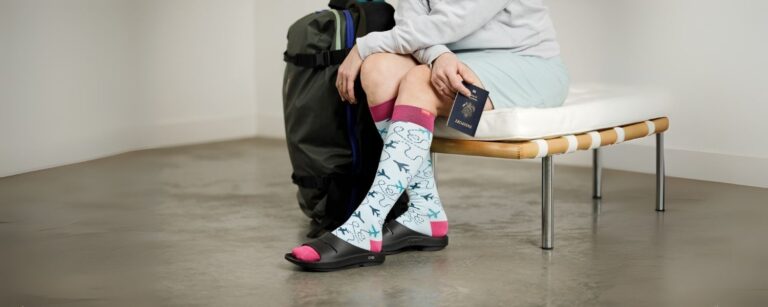
Compression socks for travel: what, why, and how
Water Bottle
For shore excursions, it’s great to have a reusable water bottle. It was especially important for my Eastern Antarctica trip since we were often on land for 3 to 4 hours at a time, thanks to our small ship numbers and the lack of other tourist boats there.
Medications to Pack for Antarctica

Most expedition ships come with highly qualified medical staff and supplies since you’re traveling around remote destinations. However, the most frequent medical issue is seasickness. Crossing through the Drake Passage or Southern Ocean is rough, and both left me feeling pretty queasy and sometimes just awful.
Be sure to do your research and talk to a doctor before you go and take seasickness meds or patches – different things work for different people, so my advice is to take more than one. Most ships also provide this, too, if you forget yours.
I started off using the Scopolamine Patch (prescription necessary from the US), but I really disliked the dry mouth and weird dreams it gave me. Then switched to Stugeron/Cinnarizine (only found in the UK over the counter), and that seemed to do better for me.
On my most recent trip, I tried yet another option for combating sea sickness – the Relief Band. This rechargeable device looks like a watch you wear on your wrist. Once activated, this anti-nausea band releases a specific pattern of pulses that stimulates the median nerve under the skin.
The pulses normalize the nerve messaging from the brain to the stomach and rapidly relieve nausea and vomiting symptoms without any side effects. You can set the strength of the pulses. I normally turned it up when we were in rougher water. It did help overall; however, on the really bad sea days, I still was sick. But for average days, it worked really well. I grew to depend on it!
People also used ginger tablets and Dramamine.
Entertainment (Digital and Non-Digital)
You will have a fair bit of free time on the ship as you make the journey, so bring things to do. Books, videos, movies, and podcasts are great for entertainment. But don’t forget it’s also nice to unplug and have some other hobbies too, such as knitting, painting, writing, etc.
Check out some great Antarctica reads before your trip!
|
|
|
|
|


Photography Equipment for Antarctica
For most people, this may be the most important gear, since you will be sharing your amazing experience when you return home. Make sure you have tested out all of your equipment before you go, and know how to use it. And bring extra batteries and SD cards – you can never have enough in Antarctica!
Batteries will deplete quickly in the cold temperatures. This is when the heated hand warmers come in handy, as you can store your camera batteries in your pocket with the hand warmers, and they will have a longer life. I used a Sony Mirrorless camera and lenses, and they worked great for my trip.
What Photo equipment should you bring for Antarctica?
See my complete list of Travel Photography Gear
One of the most important things when on zodiacs and the ship is that you keep your hands free in case there is a big swell, etc. I use my Cotton Carrier Harness to carry my camera on landings, the zodiac, and around the ship. I wore this thing everywhere! Not only does it allow you to be hands-free, but it also helps distribute the weight evenly across your shoulders and back when you are carrying heavy camera equipment. This is a lifesaver for any photographer in Antarctica!
Don’t have a telephoto lens for those penguin and whale close-ups? Then consider renting a lens before you go! Places like BorrowLenses.com allow you to rent by the week.
Rain/Snow Gear for Your Camera

Just as you waterproof your clothes, you’ll want to protect your camera too. I use a simple raincoat from LensCoat, which is great for this type of outdoor shooting when the weather quickly changes.
Plus, you can also get LensCoat Lenscovers that will protect your lenses from weather and, most importantly, saltwater spray. These neoprene covers are made specifically for various lenses from all major brands and easily slip right onto your lens. In addition to protecting your gear, it’s also nice because it helps you grip your equipment and keep it warm.
Non-Cloud Backup
Take a way to back up your photos while you go (laptop, iPad, or notebook). You don’t want to risk losing them!
Be prepared for not having any ‘cloud’ storage/backup availability, as the internet access is only available via satellite from the expedition ships, and it can be VERY expensive to use. This is continuing to change as things like Starlink become available on more ships, but it’s always good to be safe and have extra backups.
I use this small SanDisk external solid-state drive. You can get a lot of storage (for all of those photos and videos) in a small package!
Emergency Evacuation Insurance
Most Antarctica expeditions require proof of Emergency Medical/Evacuation Insurance. This is pretty much the norm on these types of remote trips. Getting proof of coverage was easy for me to do. I just called my insurance provider and made sure I was covered, and then had them send me the paperwork that provided my proof of coverage.
If you don’t have emergency evacuation insurance under your normal medical insurance, then you’ll need to look into travel insurance plans that cover you separately. I used Allianz Travel Insurance to determine my choices and choose a plan that worked for Antarctica.
Extra Passport Pages
Make sure you have empty passport pages. Most of the research stations the ships stop at will stamp your passport with a special Antarctica stamp.
Cash
Yes, you can shop in Antarctica! The ships normally stop at various simple research stations along the peninsula, and most of the stations sell Antarctica memorabilia. You’ll find hats, postcards, patches, wine, mittens, and even vodka!
You’re all set to visit this magical remote land! Stay warm and Bon Voyage!






A hiking pole is great too for something to hang on to while you try to ease your foot, along with your boot, out of the very sucky mud/pelican poo gumbo between the rocks and on some trails.
SO TRUE!! I actually was just looking at some video footage of me walking through muck in my boots…
My parents had an exciting trip to the Antarctic – their ship crashed into an iceberg and they had to be rescued! As part of their package they were given fabulous water/windproof coats. The coats are fantastic reminders of their adventure but total overkill for Australia! 😉 Thanks for the packing insight. I can’t wait to get to Antarctica myself. Mel
Wow – what an Adventure! They really crashed into an iceberg?!! Crazy. Did they go from Australia/New Zealand or South America?
Great post, Antarctica is an awesome place and have so many good things to enjoy. i really like its beauty and you shared amazing packing list of that place.
My Antarctica trip is still years away and this guide was fascinating to read because at this point I know almost nothing other than: I want to go. I didn’t expect to hear about rain! And I had no idea I could get a raincoat for my camera. Thanks for this list!
Erin – you have so much to look forward to! The rain was mainly in the Subantarctic Islands which is further north. If you go to the peninsula from South America then you probably won’t have that issue. But rain pants are required regardless as you will have wet landings. And honestly a waterproof coat is great for the Zodiacs. Let me know if I can be of any help!
Amazing photography Sherry! I’m a fan 🙂 Antartica is on my list but still years away. I’ll definitely use this article as a resource when the time comes.
Hi, Sherry,
Great meeting you on TripAdvisor, and getting to hear some more about the Spirit of Enderby. I noticed that your next trip is to Norway. Have you been there yet? We’ve done a couple of trips to Norway – the first to hike above the fjords, centered in the most incredible botique hotel not too far from Trollsteigen, and the second to spend 10 days exploring the Lofoten Islands. If you haven’t read it, I suggest a book called Summer LIght, a walk through Norway, which gives a true view of being Norwegian and living Norwegian.
cheers
dick troop
[email protected]
Hey Dick – thanks for stopping by! And thanks for the book tip for Norway. This will be my first trip there and I”m really excited. I’ll be in Oslo for a couple of days and then up to Fjordland – however now as far north as Lofoten Islands. However I do believe I’ll be near Trollsteigen. Still working out itinerary. But it’ll be a driving trip – I can’t wait! Let me know if I can be of any help on the Antarctica stuff – you’ll have a wonderful time!!
Mange takk, Sherry [do you have time to learn to speak a little Norsk? The transliterations don’t work at all.]. On our first trip, we flew into Oslo, took the train from the airport into town (the best way to go), and flew the next day to Ålesund, where we rented a car. It’s very easy to drive in Norway, but you do need to pay attention to the ferry schedules as you make your way around. The first place we stayed was the Juvet Landscape Hotel (google it), which was the site used for the movie Ex Machina — spectacular. Our host furnished us with topo’s that we used for our hikes. Then we drove to the Hotel Union Oye, and did some great hikes and side trips around there. I’ll see if my album from that trip is still available online
cheers
dick
I do have my photo album of the trip. If you email me your email address (to [email protected]) I can send you a link to it.
d